There’s a common misconception—often held by those without business experience—that opening a daycare center is simply about choosing a location in a high-income neighborhood. In many cases, this becomes the sole focus, as if success is guaranteed by the right postal code.
But location, while important, is far from the only factor that determines the success of a business.
Consider a few analogies.
Imagine a Tim Hortons is thriving on a busy street. A new café—say, “Java Jane”—opens right next door. Will it automatically succeed? There’s no guarantee. It might, or it might not.
Take it further: if Tim Hortons closes (not due to poor sales, but perhaps to relocate or upgrade), and someone takes over the exact same space—with similar branding, layout, and even the red signage—will it still draw the same long lines? Again, maybe. Maybe not.
Or consider a popular restaurant with a consistent lineup. The owner retires, and the new operator keeps everything identical: same menu, same tables, same pricing. Will people continue to line up? There’s no certainty.
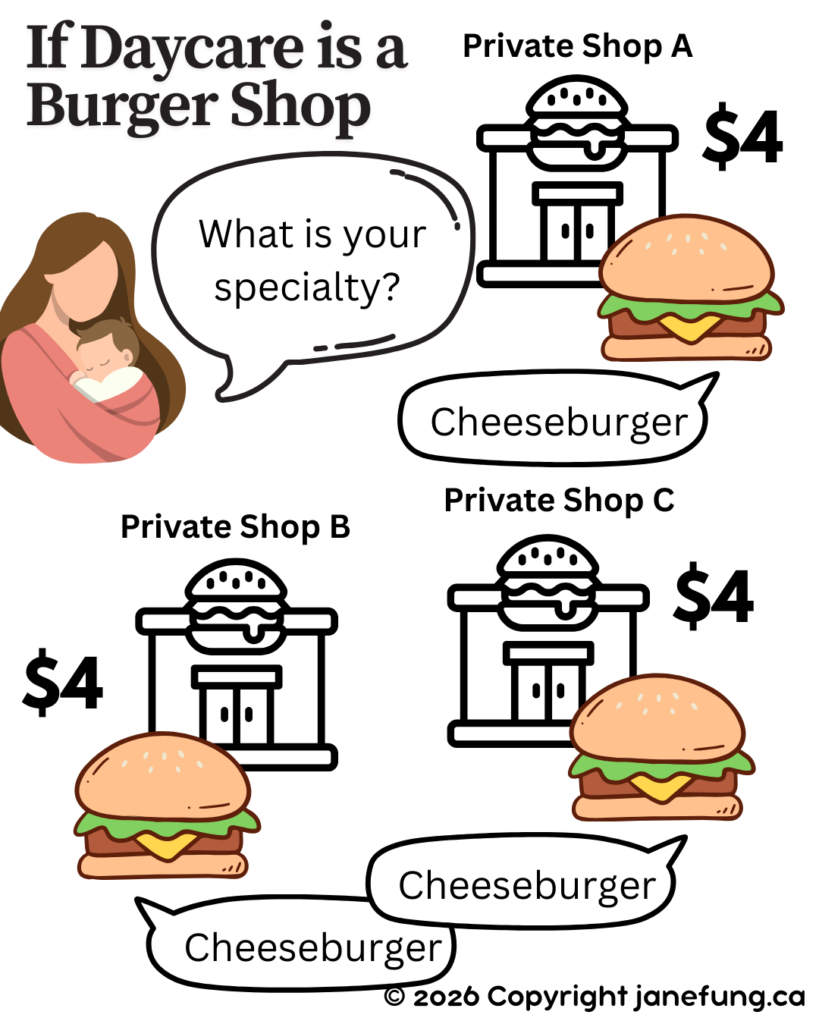
The lesson is clear: while location plays a role, the “soft factors”—brand reputation, customer experience, service quality, operational excellence—are just as important, if not more so. This principle applies directly to daycare businesses. Just like any other venture, a daycare requires a solid foundation: a clear niche, a validated demand, strong financial planning, and a well-thought-out operational strategy.
Many aspiring daycare owners focus heavily on real estate early in the process. Touring properties feels productive—it gives the sense of momentum. But this can be a distraction from the deeper work that determines long-term success.
A more effective starting point? Market testing. For example, visiting an EarlyON or similar center—where potential clients (parents with infants and toddlers) already gather—and gauging real interest. If families are truly desperate for childcare, would they be willing to place a refundable deposit to secure a spot on a future waitlist? This kind of feedback is far more telling than just studying demographics.
Ultimately, location should be the final piece of the puzzle—not the first. Building a business around the thrill of shopping for properties can create a false sense of progress. The real progress comes from calmly and thoroughly developing a business plan, identifying a unique value proposition, securing financing, and validating demand.
Once those elements are in place, finding the right location becomes easier—and far more strategic. Success isn’t about where a daycare is placed, but about what it offers and how well it serves its community.