The CWELCC program provides an estimator tool to help childcare centres project their funding allocations. Please note that this estimator is specific to the 2026 CWELCC funding year for estimating your CWELCC funding. As the program evolves, updated estimators may become available in future years.
This article will guide you through estimating your CWELCC funding and understanding the potential allocation your centre might receive.
To illustrate the process, we will use a hypothetical example:
A private childcare centre in Toronto with 50 children:
15 toddlers
35 preschoolers
This centre is already enrolled in the CWELCC program as of 2023 and is not planning to extend its capacity further.
How to Use the Estimator
Below are the steps for completing the CWELCC estimator to project your funding.
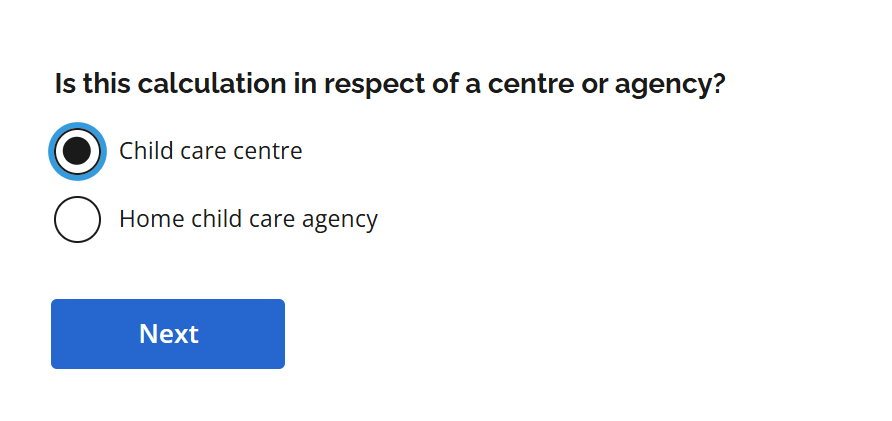
Child Care Centre Business Owner
If you are not located at home, then you are a “Child care centre”.
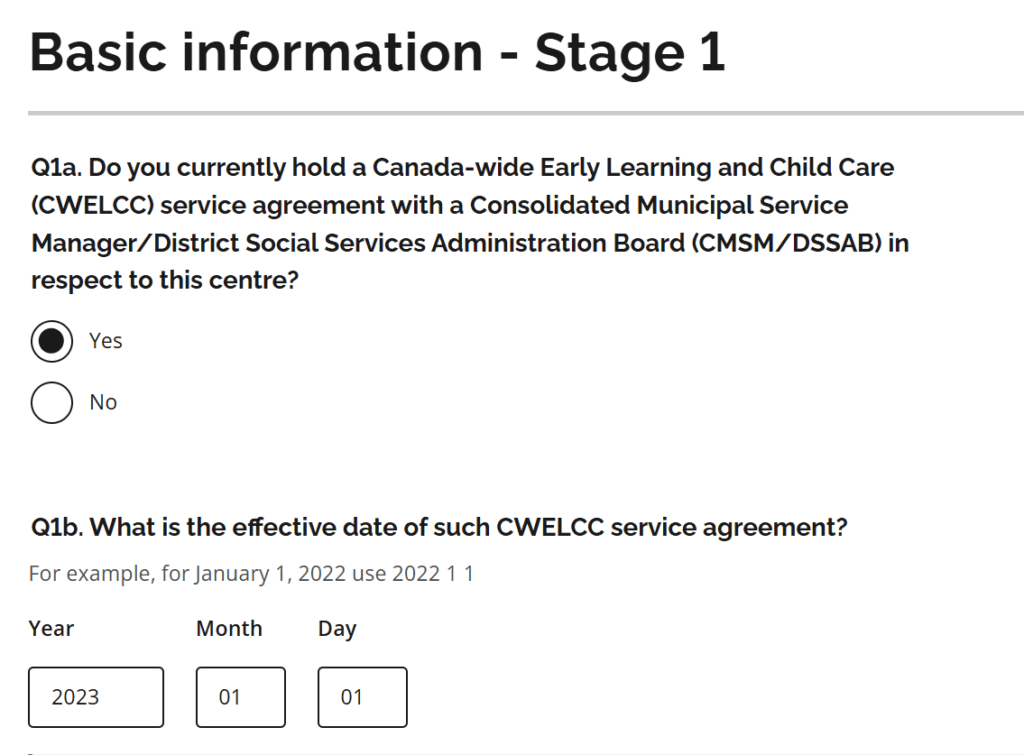
In our hypothetical childcare centre, we are already enrolled in the CWELCC program since 2023.
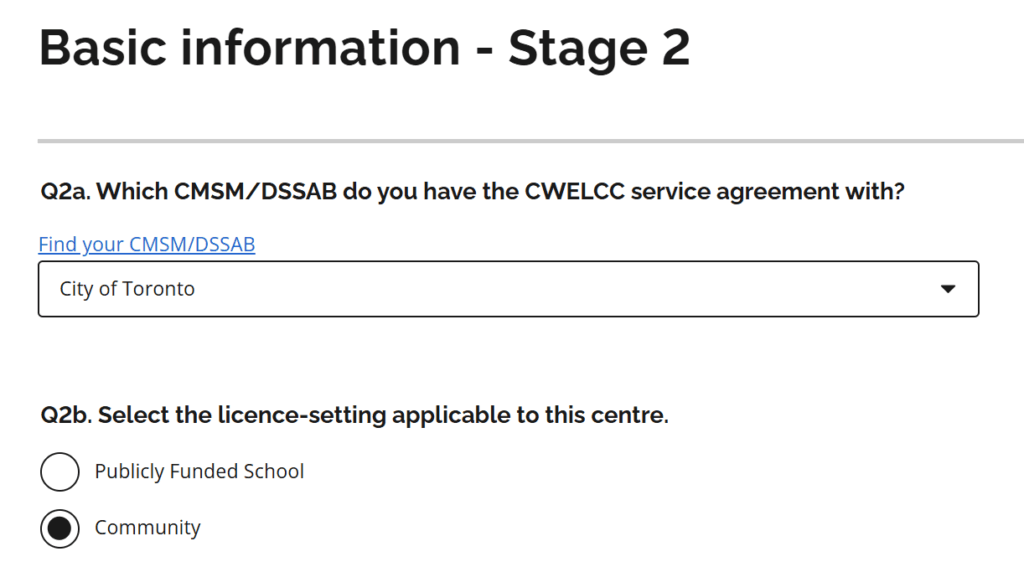
Select the region that your childcare centre belongs to. If you are not in a public schoo, then you are considered “Community”.
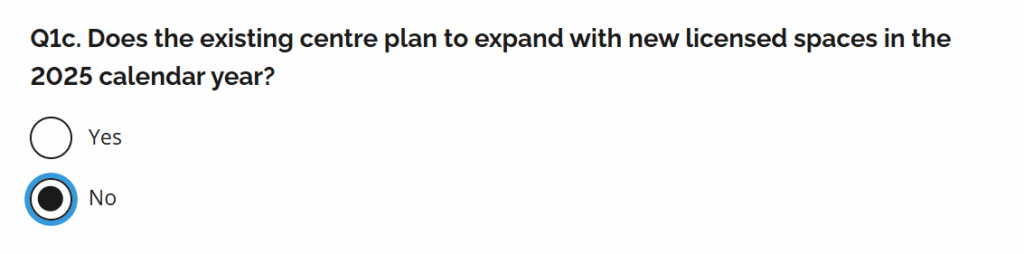
In our hypothetical daycare, we are not expanding.
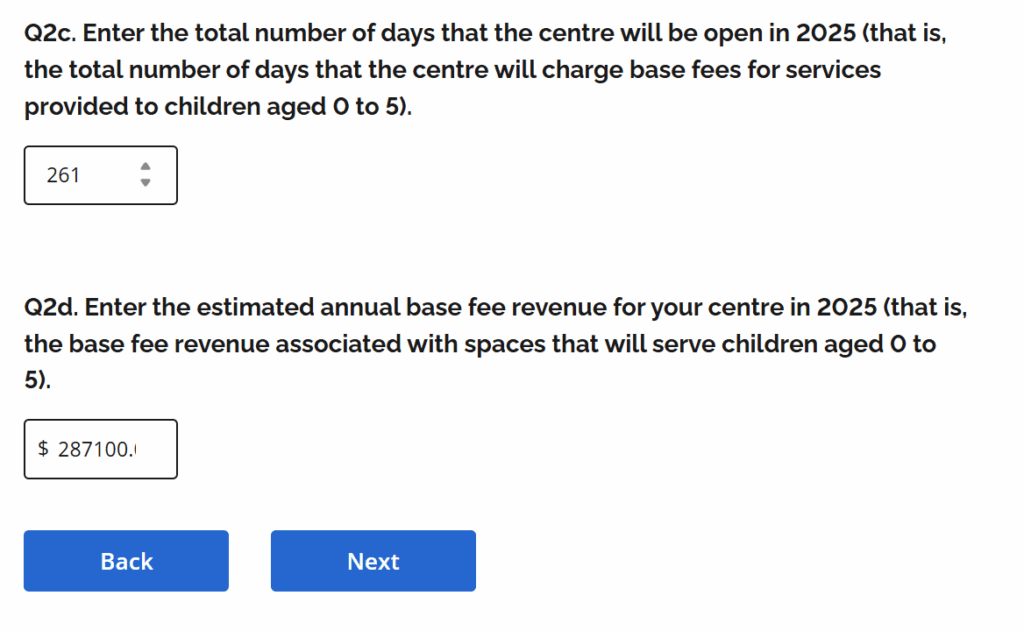
Enter 261 days for Q2c.
Q2d is asking how much would the parent’s fee be. In 2026, parents still have to pay $22 / day. The formula for Q2d is as follow:
= number of students x $22 / day x 261 days
For our daycare, we have 50 students.
The amount that the parents have to pay is $287,100 for 2026.
Note that if the government continues to reduce the daily fee that parents pay, you will have to use the latest daily parent fee in this calculation. For example, if the government reduces the parent fee to $19/day, then the math will be
= number of students x $19 / day x 261 days
= 50 x $19 / day x 261 days = $247,950
And if your centre plans to open fewer days. For example, the government only allows 21 days of holidays per year and you plan to take 30 days off in total, then you need to deduct another 10 days from the 261 days in the calculation. This is just approximation. Your actual allocation could be different. Note that you have to adjust to the lower days in all of the fields not just in this one particular calculations.
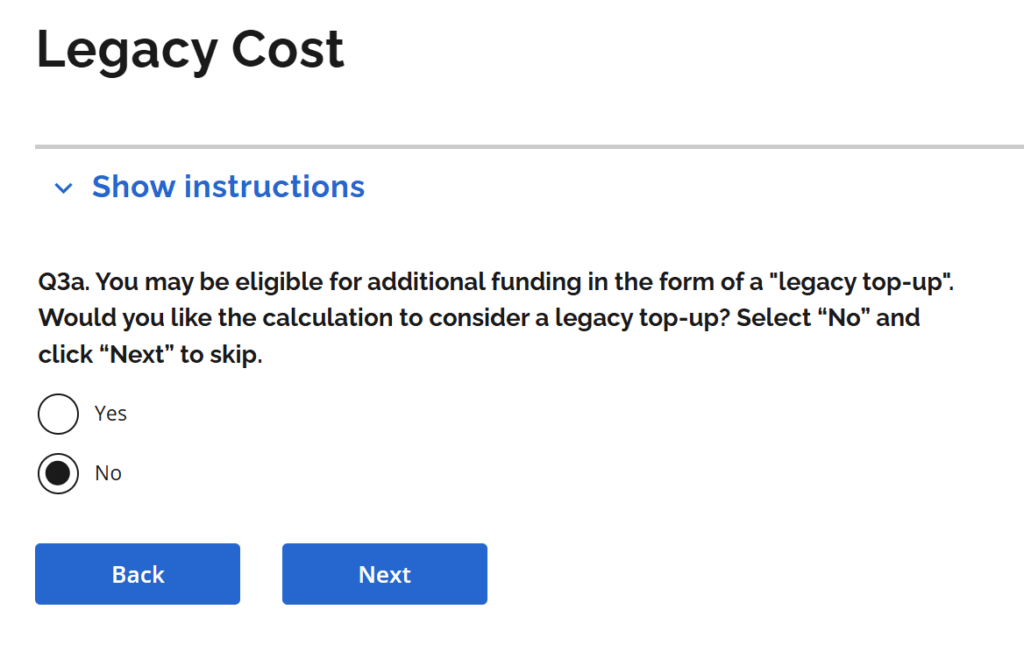
We are not adding top-up here. As per the instructions, let’s see if the allocation can cover your expenses first. If it doesn’t, then you can add the top-up.
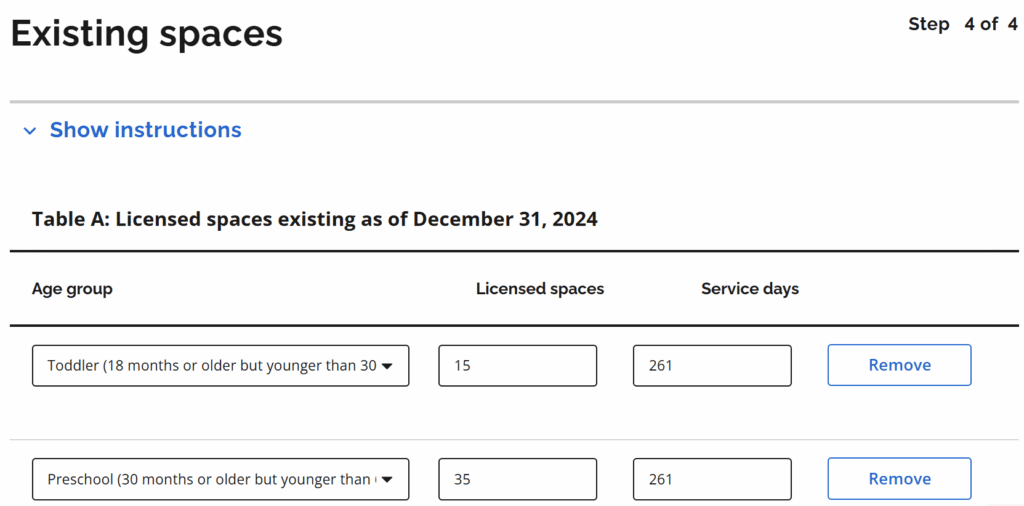
Enter the students numbers. For this hypothetical daycare, we have 15 toddlers and 35 preschoolers. And there are 261 service days.
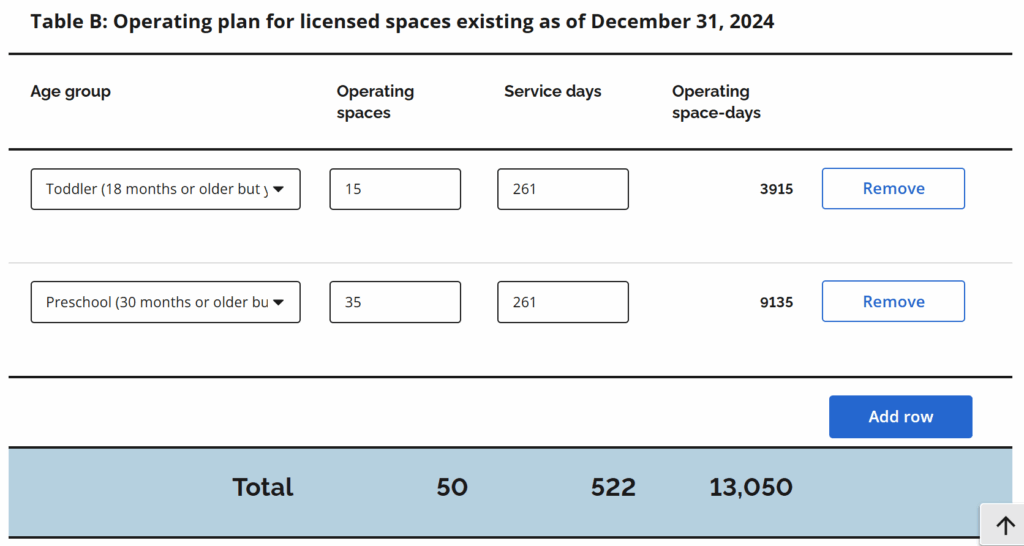
In Table B, you will enter your operating spaces, which refers to the number of spaces actively in use at your centre. Sometimes, a centre may be licensed for a higher number of spaces but choose not to operate all of them. For example, you might have a licensed capacity for 16 toddlers, but to avoid hiring an additional staff member, you operate only 15 of those spaces. In this case, your licensed capacity remains 16, but your operating spaces would be entered as 15.
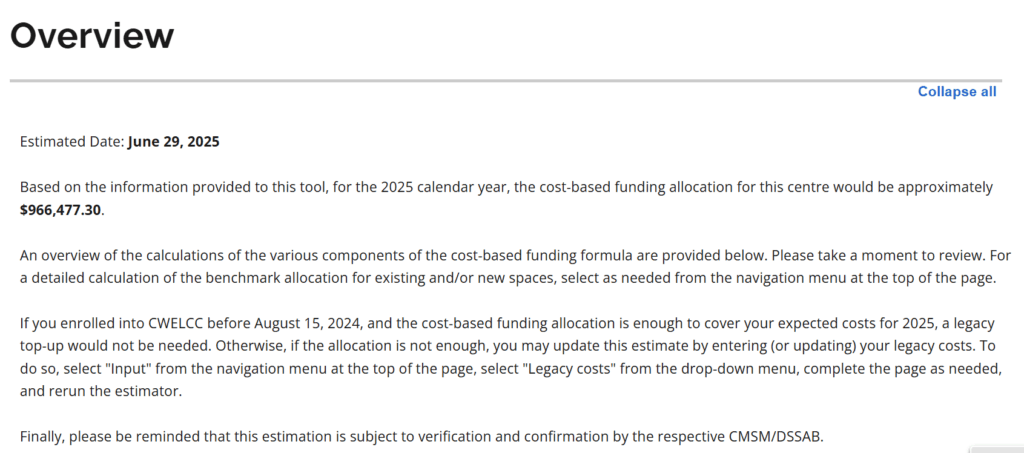
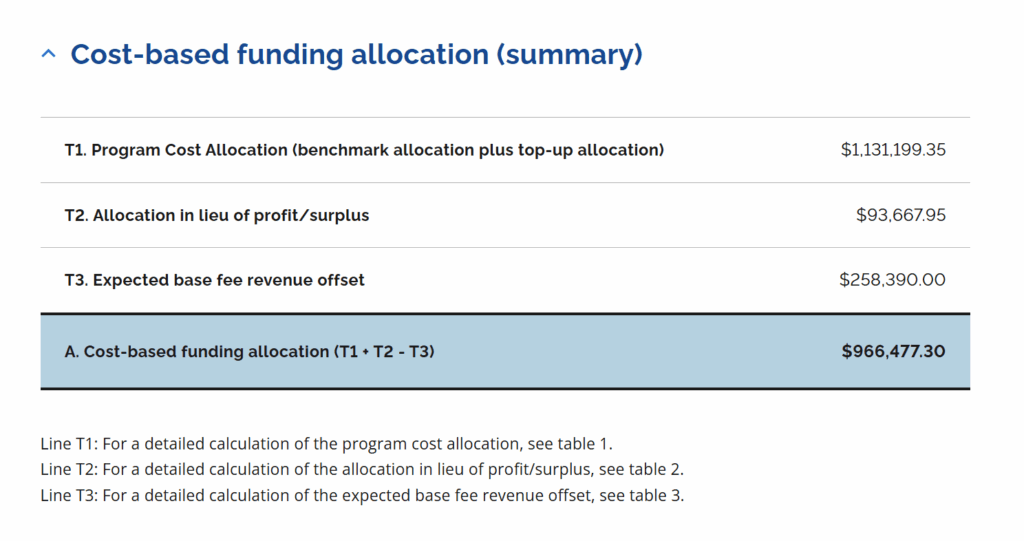
This is your result, your centre is estimated to received $966,477.30 for the year.