Environmental Site Assessment (ESA) Phase 1 and Phase 2 reports are common terms in commercial settings. In the world of real estate development and childcare licensing, the acronym “ESA” can refer to two very different, but equally critical, requirements. Understanding the distinction is vital for any operator entering the due diligence (DD) phase of a project.
First, there is the Electrical Safety Authority (ESA). This provincial body is responsible for ensuring that all electrical wiring and installations meet the Ontario Electrical Safety Code. For a daycare, an Environmental Site Assessment (ESA) inspection is a standard requirement to ensure the facility is safe for children and staff during the building permit phase. Most of the time, we do not need to do both Environmental Site Assessment (ESA) Phase 1 and Phase 2; however, in the rare occasions, Phase 2 might be required.
Environmental Site Assessment (ESA) Phase 1
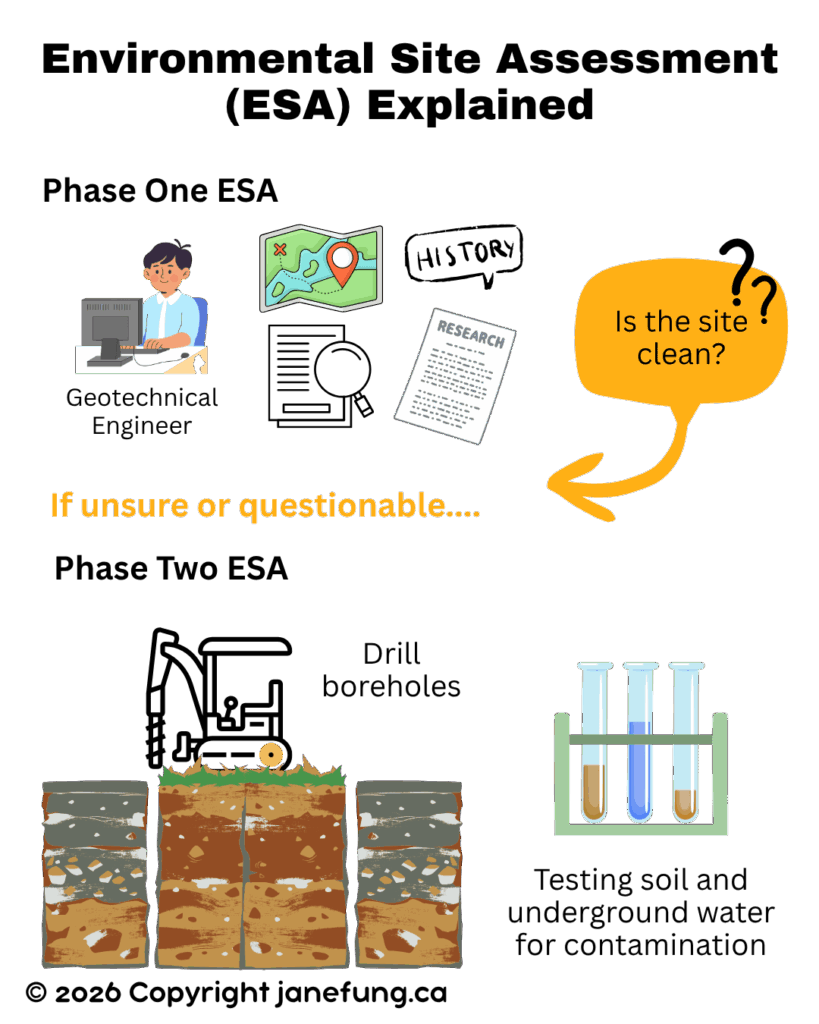
The second “ESA” refers to an Environmental Site Assessment. This process begins with a Phase 1 ESA, which is a non-intrusive investigation. It involves a thorough review of the property’s history, including past land uses, municipal records, aerial photographs, and a site walk-through.
The goal of a Phase 1 is to identify any environmental conditions; essentially any evidence that past activities, such as an old gas station or dry cleaner nearby, might have left behind contamination. If the report identifies these risks, the site is considered “not clean,” and the project must move into a Phase 2 ESA.
A Phase 1 ESA may range from $3000 to $10,000 or more depending on the site location, consultant and sizes.
Environmental Site Assessment (ESA) Phase 2
A Phase 2 ESA is significantly more expensive than a Phase 1, often ranging from $30,000 to $50,000 or more. This increase in cost is due to the physical labor and laboratory testing required:
- Borehole Drilling: The engineering team must drill into the ground, often reaching depths of 15 to 20 feet (or deeper) until the water table is reached.
- Soil Sampling: Soil must be extracted from multiple levels to test for contaminants.
- Groundwater Testing: Water samples are collected and analyzed to ensure pollutants haven’t migrated through the subsurface.
The Risk of Remediation
If the Phase 2 ESA confirms contamination, the next step is remediation. This involves the physical removal or treatment of contaminated soil and groundwater. Remediation costs are notoriously high and can easily render a childcare project financially unviable.
Because of these potential expenses, it is generally recommended that daycare owners exercise extreme caution if a Phase 1 ESA comes back “dirty.” Unless there is a significant strategic reason to proceed, the cost of cleaning a site often outweighs the business sense of the location.
The Importance of Due Diligence
These assessments should be completed during the Due Diligence (DD) period. Identifying these environmental hurdles before the deal is firm protects the operator from being committed to a location that may require hundreds of thousands of dollars in unforeseen environmental costs. You can hire Geotechnical engineer to do the ESA for you.